Robert Edward Carter was born on a gusty October morning in 1948 in Exeter, Devon — the younger son of Arthur, a railway signalman, and Margaret, who tended schoolhouse hearths. From the time he could toddle across the kitchen flagstones, Bob was possessed by what his brother David called “an incurable mechanical stubbornness.”
Where other boys chased footballs across the common, Robert collected discarded clock springs, bicycle bearings, and broken umbrella ribs. By age twelve, he had dismantled his father’s pocket watch four separate times — not out of mischief, but because he was convinced he could make the ticking “a hair softer.”
“If something doesn’t run true, don’t curse the metal. Metal only remembers the pressure someone put into it. Give it patience and heat, and it will settle.”
Clerkenwell, Brass Gears & Meena (1968–1982)
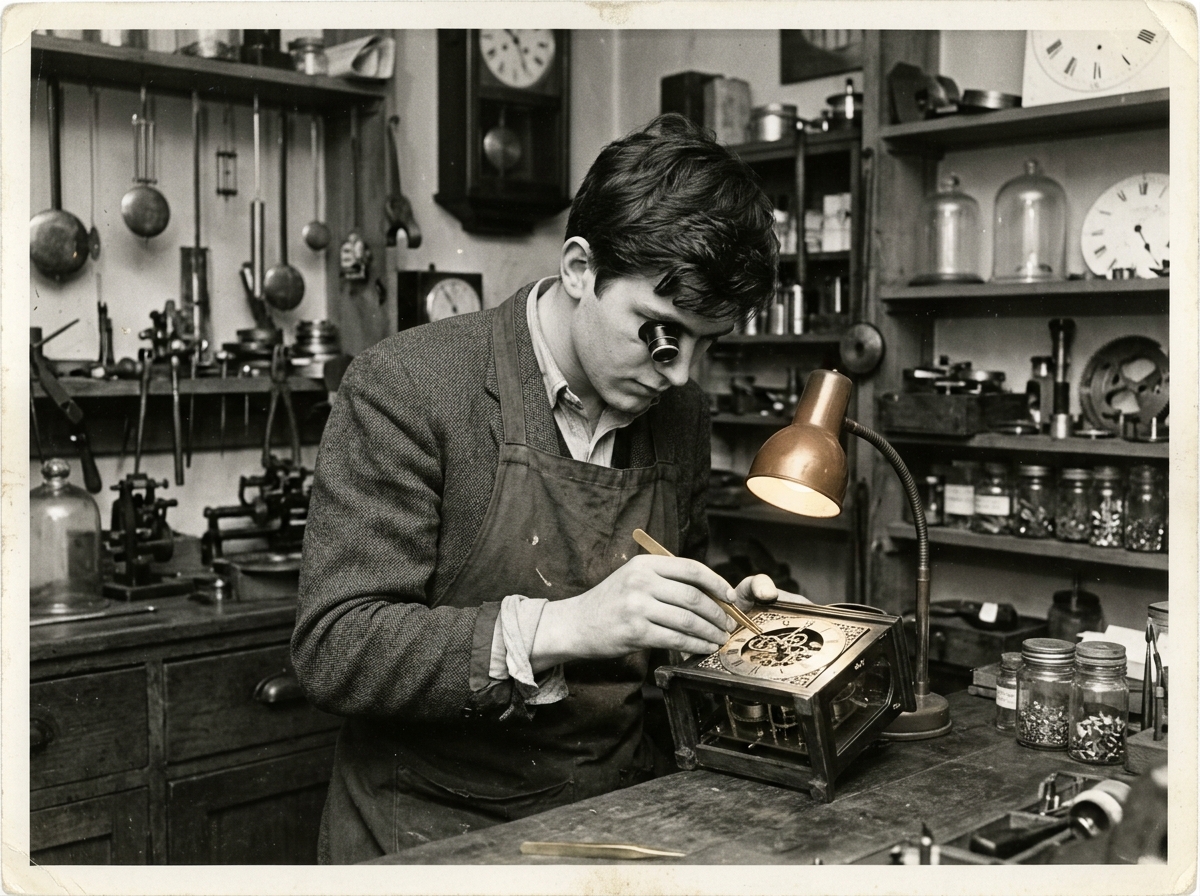
In the autumn of 1968, nineteen-year-old Robert packed a cardboard suitcase and boarded a steam train for London. He had secured a coveted horological apprenticeship in the historic clockmaking quarter of Clerkenwell. For five years, under the exacting eye of master horologist George Davies, Bob learned to turn brass pinions on a foot-treadle lathe and balance hairsprings thin as horsehair.
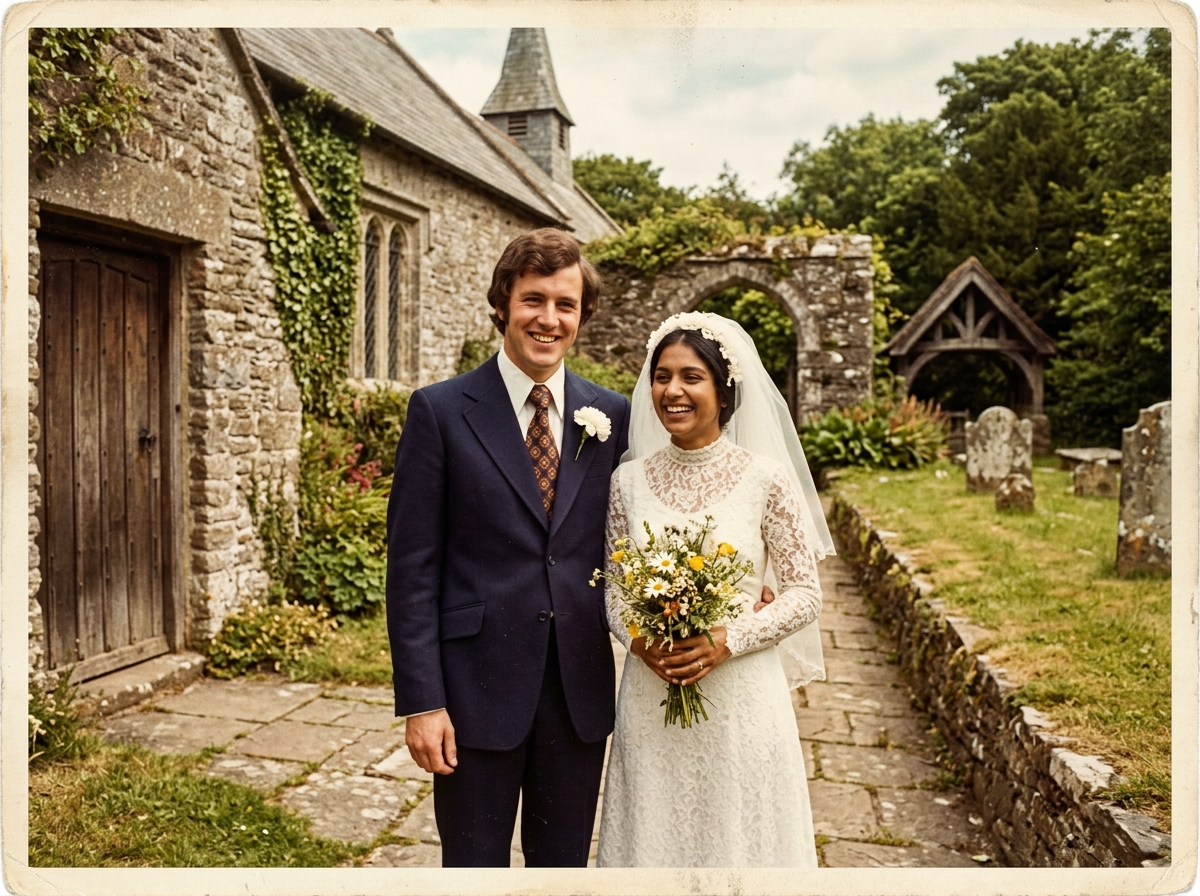
It was during a rainy winter lunch at a tea stall on Rosebery Avenue that he spilled sugar into the saucer of a young mathematics student named Meena Patel. She corrected his grammar; he offered to mend the clasp on her leather handbag. They married in the summer of 1974 at St. Jude’s Parish, surrounded by wild heather and twenty-two members of Meena’s family who immediately adopted the shy Devon boy into their vibrant Sunday curries.
Carter Clocks & The Open Door (1983–2017)
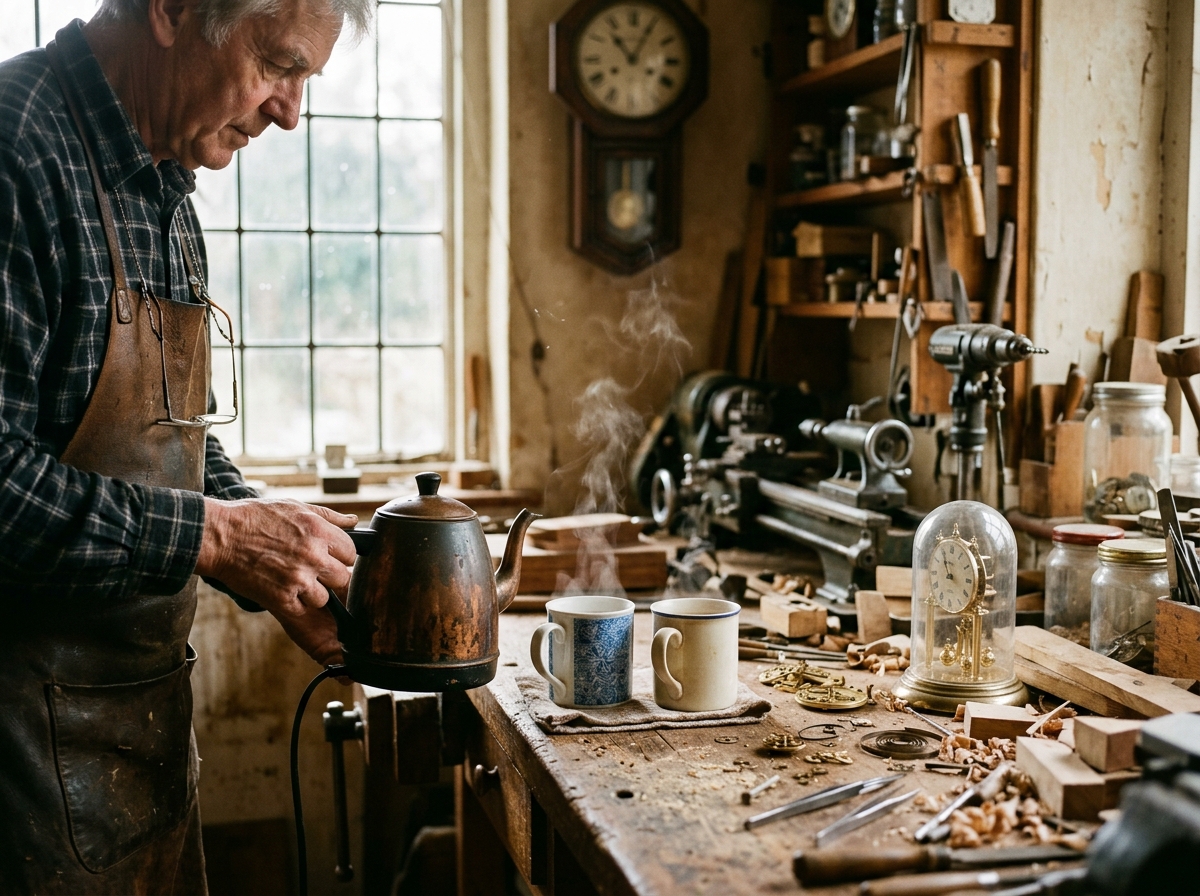
In 1983, Robert returned home to Devon and opened Carter Clocks & Woodworking on the High Street. Over thirty-four years, that narrow workshop became an unofficial town sanctuary. The brass bell over the door chimed constantly — not just for grandfather clocks needing repair, but for neighbours carrying broken lawnmowers, schoolgirls with jammed violin pegs, and old friends needing an unhurried listener.
The Four Unwritten Bench Rules
Taped with yellowing masking tape to his workbench were four guidelines he taught every apprentice:
- Never strike cold brass: “Take the time to warm the metal, or prepare to apologise to it.”
- The kettle is part of the toolkit: “No panic ever survived a fresh pot of hot tea.”
- Keep the original scratches: “A grandfather clock without dings is just furniture with no memories.”
- No clock leaves until it purrs: “If it limps out of the shop, your name limps with it.”
You can explore original photographs and workshop recordings in Robert's Life Gallery, including his beloved 1974 Morris Minor engine.
The Rose Garden & The Last Chapter (2018–2024)
When Robert retired in the spring of 2018, he handed his workshop keys to his senior apprentice Sarah Jenkins, keeping only a pocket set of whittling knives and an oilstone. He turned his attention to the garden behind his stone cottage on the rim of Dartmoor National Park.
He spent his final years cultivating heirloom heritage roses — particularly Rosa mundi and sweetbriar — and teaching his granddaughter Anita how to identify every native songbird of Devon by its morning trill. He died peacefully at home on a bright April afternoon in 2024, surrounded by family, with his beloved garden roses visible through the bedroom window.